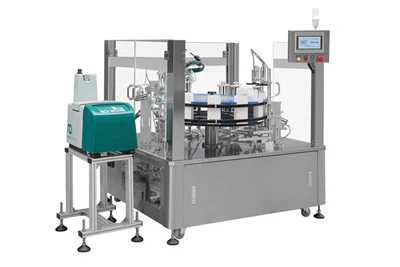
As a supplier of Truss Automatic Palletizers, I often get asked if our machines can be used for palletizing products in different layers. Well, the short answer is a resounding yes! In this blog post, I'll dive into the details of how our Truss Automatic Palletizers can handle various layer configurations, and why they're a great choice for businesses looking to streamline their palletizing processes.
How Truss Automatic Palletizers Work
First off, let's talk a bit about how these machines operate. A Truss Automatic Palletizer is a type of industrial robot that's designed to stack products onto pallets in an organized and efficient manner. It uses a truss structure, which provides a stable and rigid framework for the robot to move along. This allows the palletizer to cover a large area and reach different parts of the pallet with ease.
The palletizer is equipped with a gripper or suction cup mechanism that can pick up products from a conveyor belt or other feeding system. It then moves the products to the pallet and places them in the desired position. The machine can be programmed to create different layer patterns, depending on the shape, size, and weight of the products.
Palletizing Products in Different Layers
One of the key advantages of our Truss Automatic Palletizers is their ability to handle products in different layers. Whether you're palletizing small boxes, large bags, or irregularly shaped items, our machines can be configured to create custom layer patterns that meet your specific requirements.
For example, let's say you're palletizing boxes of different sizes. Our palletizer can be programmed to stack the boxes in a way that maximizes the use of space on the pallet. It can create layers of different heights and widths, depending on the dimensions of the boxes. This not only helps to reduce the amount of wasted space on the pallet but also makes it easier to transport and store the products.
In addition to creating custom layer patterns, our Truss Automatic Palletizers can also handle products in different orientations. For instance, if you're palletizing bottles, the machine can be programmed to stack them either vertically or horizontally, depending on your needs. This flexibility allows you to optimize the palletizing process and ensure that your products are stacked in the most efficient way possible.
Benefits of Using a Truss Automatic Palletizer for Different Layer Palletizing
There are several benefits to using a Truss Automatic Palletizer for palletizing products in different layers. Here are just a few:
1. Increased Efficiency
By automating the palletizing process, our machines can significantly increase the speed and efficiency of your operations. They can work continuously without breaks, which means you can palletize more products in less time. This can help to reduce labor costs and improve overall productivity.
2. Improved Quality
Our Truss Automatic Palletizers are designed to stack products in a precise and consistent manner. This helps to ensure that your pallets are stable and secure, which reduces the risk of product damage during transportation and storage. Additionally, the machines can be programmed to detect and reject any defective products, which helps to improve the quality of your finished pallets.
3. Flexibility
As mentioned earlier, our palletizers can be configured to handle products in different layers and orientations. This makes them a versatile solution for a wide range of industries and applications. Whether you're palletizing food products, pharmaceuticals, or consumer goods, our machines can be customized to meet your specific needs.
4. Safety
Automating the palletizing process can help to improve workplace safety by reducing the risk of injuries associated with manual handling. Our machines are equipped with safety features such as sensors and guards to prevent accidents and ensure the well-being of your employees.


Different Types of Truss Automatic Palletizers
There are several different types of Truss Automatic Palletizers available on the market, each with its own unique features and capabilities. Here are a few examples:
1. Gantry Palletizing
Gantry palletizers are large, heavy-duty machines that are typically used for high-volume palletizing applications. They feature a gantry structure that spans the width of the palletizing area, allowing the robot to move freely in all directions. Gantry palletizers are capable of handling a wide range of products and can create complex layer patterns.
2. Single Column Six Axis Rotary Palletizing
Single column six axis rotary palletizers are more compact and flexible than gantry palletizers. They feature a single column that supports the robot arm, which can rotate in six different axes. This allows the palletizer to reach different parts of the pallet and create a variety of layer patterns. Single column six axis rotary palletizers are ideal for smaller-scale palletizing applications.
3. Three Axis Truss Palletizer
Three axis truss palletizers are a cost-effective solution for palletizing products in a simple layer pattern. They feature a truss structure that supports the robot arm, which can move in three different axes. Three axis truss palletizers are easy to operate and maintain, making them a popular choice for businesses with limited resources.
Conclusion
In conclusion, our Truss Automatic Palletizers are a great choice for businesses looking to palletize products in different layers. They offer a range of benefits, including increased efficiency, improved quality, flexibility, and safety. Whether you're a small business or a large corporation, our machines can be customized to meet your specific needs and help you streamline your palletizing processes.
If you're interested in learning more about our Truss Automatic Palletizers or would like to discuss your palletizing requirements, please don't hesitate to contact us. We'd be happy to provide you with more information and answer any questions you may have.
References
- Industrial Robotics Handbook
- Palletizing Technology and Applications
- Automation in Material Handling