

Hey there! As a supplier of robot stations, I often get asked about the power requirements for these high - tech setups. So, let's dive right in and break it all down.
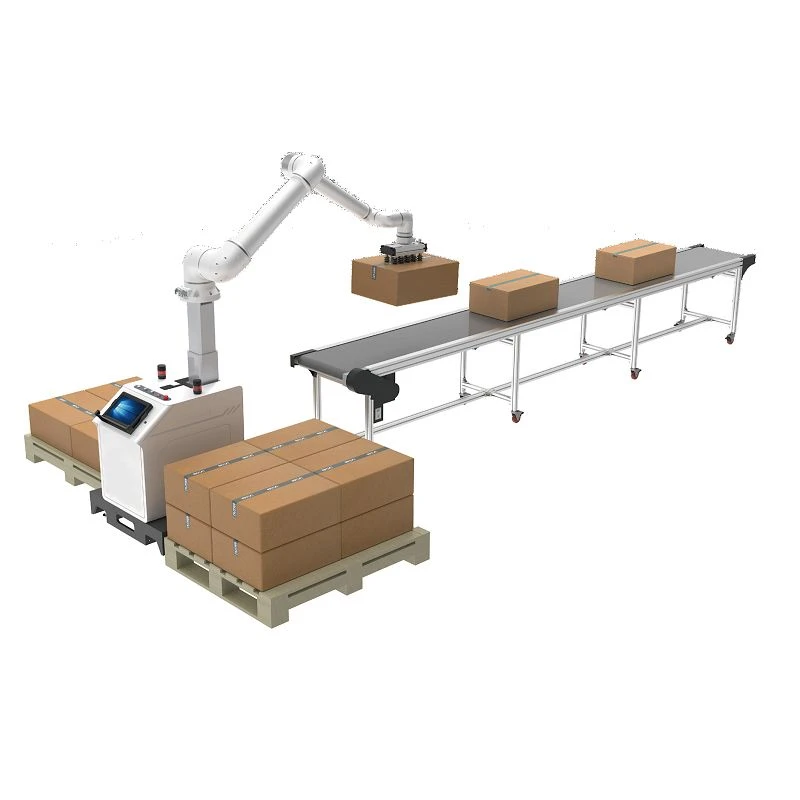

First off, it's important to know that the power needs of a robot station can vary widely depending on several factors. One of the main things that affects power consumption is the type of robot used in the station. For instance, industrial robots are usually much more power - hungry than smaller, collaborative robots.
Industrial robots are designed to handle heavy - duty tasks like lifting large objects, welding, or painting on a large scale. These robots often have powerful motors and complex control systems. The motors need a significant amount of power to generate the force required to move heavy loads. A large - scale industrial robot might have motors with power ratings in the range of several kilowatts. For example, a six - axis industrial robot used in an automotive manufacturing plant could have a total power consumption of around 5 - 10 kilowatts during normal operation. This high power is needed to ensure that the robot can move quickly and precisely, even when carrying heavy car parts.
On the other hand, collaborative robots are built to work alongside humans in more flexible and less strenuous environments. They are generally smaller and lighter, which means their motors don't need as much power. A typical collaborative robot might consume anywhere from 200 watts to 1 kilowatt. These robots are often used in tasks like assembling small electronic components or picking and placing items in a warehouse. Their lower power consumption makes them more energy - efficient and also safer to operate around humans.
Another factor that impacts power requirements is the number of robots in the station. If you have a multi - robot station where several robots are working in tandem, the total power consumption will be the sum of the individual robot's power needs, plus any additional power required for coordinating their movements. For example, in a large - scale logistics robot station with 10 collaborative robots, each consuming 500 watts, the robots alone would need 5 kilowatts. But you also have to account for the power needed for the control system that manages all these robots, which could add another few hundred watts to a couple of kilowatts depending on its complexity.
The operation mode of the robot station also plays a big role. If the robots are constantly running at full speed without any breaks, they will consume more power than if they are operating in a more intermittent or start - stop mode. For example, in a robot station that is used for batch processing, the robots might be idle for some periods between batches. During these idle times, their power consumption drops significantly. So, when calculating the power requirements, it's important to consider the typical duty cycle of the robots.
The type of end - effector attached to the robot can also influence power consumption. An end - effector is the tool at the end of the robot's arm that performs the actual task. For example, a high - speed drill end - effector will need more power to operate than a simple gripper. If a robot is equipped with a power - hungry end - effector like a laser cutter, this can increase the overall power requirements of the robot station substantially.
Moreover, the auxiliary equipment in the robot station needs to be taken into account. This includes things like sensors, cameras, conveyors, and lighting. Sensors are crucial for a robot to perceive its environment. Cameras are used for vision - based tasks such as object recognition. Conveyors are used to transport materials to and from the robots. All these pieces of equipment draw power. For example, a high - resolution industrial camera might consume 50 - 100 watts, and a small conveyor belt could use 100 - 300 watts depending on its size and speed.
When setting up a robot station, it's essential to ensure that the power supply can handle the total load. You need to have a reliable electrical infrastructure in place. This might involve installing a dedicated electrical circuit for the robot station to prevent power fluctuations and ensure stable operation. It's also a good idea to have a power backup system, such as an uninterruptible power supply (UPS). A UPS can provide temporary power in case of a sudden power outage, protecting the robots and the control systems from damage and preventing data loss.
Now, let's talk about some of the ways to optimize power consumption in a robot station. One approach is to use energy - efficient motors. Many modern robot manufacturers are now offering robots with high - efficiency motors that consume less power while still delivering the same performance. Another way is to optimize the robot's programming. By adjusting the speed and acceleration profiles of the robots, you can reduce unnecessary energy consumption. For example, if a robot doesn't need to move at full speed all the time, programming it to move at a more moderate speed can save a significant amount of power over time.
There are also some great software tools available that can help you manage and monitor the power usage of your robot station. The Spider Hand App is one such tool. It allows you to keep track of the power consumption of individual robots and the overall station. With this app, you can identify areas where power is being wasted and take steps to optimize it. The Collaborative Robot Application is another useful resource. It provides features for coordinating the operation of multiple collaborative robots in an energy - efficient way.
In conclusion, understanding the power requirements for a robot station is crucial for a successful and efficient operation. Whether you're looking to set up a new robot station or optimize an existing one, taking into account all the factors we've discussed here will help you make informed decisions. If you're in the market for a robot station and want to learn more about how to meet the power requirements and get the most efficient setup, don't hesitate to reach out. We're here to help you find the perfect solution for your needs.
References
- "Robotics Technology Handbook." Publisher: TechPub Inc.
- "Energy Management in Industrial Automation Systems." Journal: Automation Insights


