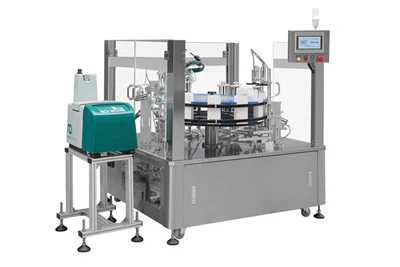
Cartoning, Packing, and sealing machines (referred to as "open-load-seal all-in-one machines""Cartoning Sealing Machine") have revolutionized packaging processes across industries by integrating box opening, product loading, and sealing into a single automated workflow. Below are detailed application cases demonstrating their versatility and efficiency in different sectors:
1. Food Industry: Biscuit and Snack Packaging

In the food industry, especially for biscuit and snack manufacturers, these machines are indispensable for high-speed, hygienic packaging. For example, a leading global biscuit brand adopted an open-load-seal system that:
• Automates box forming: Uses robotic arms to fold and assemble flat cardboard into sturdy cartons within seconds.
• Precision loading: Employs vision sensors to count and place exactly 200g of biscuits into each carton, ensuring consistent weight and reducing manual errors.
• Seamless sealing: Utilizes hot-melt adhesive or tape sealing to secure cartons, with real-time quality checks to reject missealed packages.
Result: The system increased packaging speed from 80 cartons/hour to 150 cartons/hour, reduced labor costs by 40%, and improved packaging consistency, meeting the brand's demand for large-scale distribution while maintaining product freshness.
2.Pharmaceutical Industry: Tablet and Capsule Packaging

In pharmaceuticals, where hygiene and precision are critical, open-load-seal machines play a vital role in packaging tablets, capsules, and medical supplies. A top pharmaceutical company implemented a sterile-grade system for its antibiotic capsule line:
• Controlled environment operation: The machine operates in a dust-free chamber with UV sterilization, ensuring no contamination during box opening and loading.
• High-precision counting: Uses optical sensors to count 30 capsules per blister pack and load them into pre-sterilized cartons, eliminating human contact with the product.
• Tamper-evident sealing: Applies heat-shrink film with batch coding for traceability and adds security seals to prevent unauthorized access.
Result: The system reduced packaging errors from 10% to 1.5%, improved compliance with FDA regulations, and doubled output while maintaining strict quality control.
3. Cosmetics and Personal Care: Skincare and Haircare Products

In the cosmetics industry, where product diversity and aesthetic packaging are key, open-load-seal machines offer flexibility for various bottle sizes and shapes. A major skincare brand integrated a modular system for its lotion and shampoo lines:
• Adjustable grippers: Features interchangeable robotic grippers that can handle 50ml travel bottles to 1L refill containers, with quick-change tooling for different product lines.
• Visual alignment: Uses AI-powered cameras to orient bottles with labels facing forward, ensuring a premium display on store shelves.
• Eco-friendly sealing: Employs water-based adhesives and recyclable cartons, aligning with the brand's sustainability goals.
Result: The machine enabled the brand to consolidate three separate packaging lines into one, saving 30% floor space and reducing changeover time between products from 2 hours to 15 minutes.
4. Electronics Industry: Small-Parts Packaging

For electronics manufacturers packaging components like circuit boards or USB drives, precision and anti-static protection are paramount. A leading electronics firm uses an anti-static open-load-seal machine for its microchip packaging:
• ESD-safe design: The machine's surfaces are grounded, and operators wear anti-static gear to prevent electrostatic discharge during box handling.
• Vacuum picking: Uses vacuum suction cups to gently lift and place delicate microchips into anti-static foam-lined cartons, minimizing damage risk.
• Barcode integration: Automatically prints and applies barcodes with component specifications for inventory management.
Result: The system reduced component damage rates from 5% to 0.8%, improved inventory accuracy to 99.5%, and streamlined logistics for just-in-time manufacturing.
Conclusion
Open-load-seal all-in-one machines have proven to be game-changers across industries, offering scalability, precision, and cost efficiency. Whether in food, pharmaceuticals, cosmetics, or electronics, their ability to automate complex packaging tasks while adapting to diverse product requirements makes them an essential asset for modern manufacturing. As technology advances-with features like AI-driven quality control and IoT connectivity-these machines will continue to drive innovation in smart packaging solutions.